In the second century .. What remains of the legacy of Karl Marx and how it affected the Arabs and Islam?
In the second century .. What remains of the legacy of Karl Marx and how it affected the Arabs and Islam?
May 5, 2018
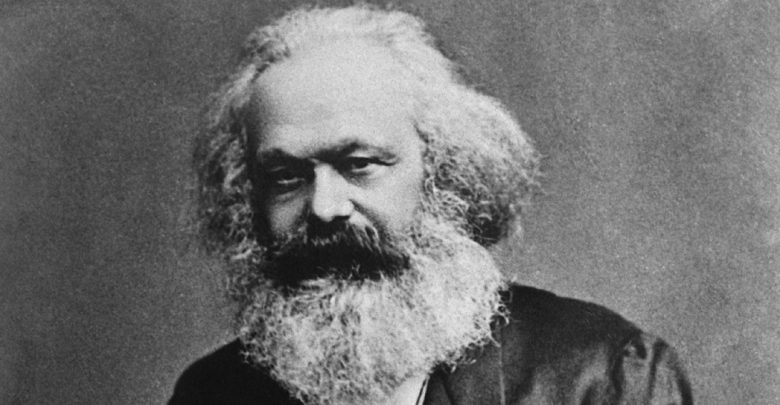
The fifth anniversary of the birth of the spiritual father of many socialist systems around the world, the German philosopher Karl Marx, is being resolved today, May 5, amid questions about the rest of the influence of the man whose writings were the cause of revolutions, regime change and war,
Genius Renewable
According to Hassan Nafah, a professor of political science at Cairo University, Karl Marx is one of the most important philosophers in all human history, pointing out that his theses are still strong and effective and allow the interpretation of many of the current political and economic positions.
"Although some Marxist analyzes have been overtaken by events because of scientific and technological development, there is no criticism of the capitalist system as true as Marx's philosophy," Nafea said. "Marxist philosophy represents a renewed genius that is being confirmed day by day, We are still talking about it and its effects "
"The legacy of Marx is still alive and inspiring for many schools of thought, regardless of whether the world is moving in the direction that Marx expected or not," the Egyptian academic said, The father of all social experiments since the Bolshevik Revolution in Russia (1917) until now ".
In his remarks, Nafaa pointed out that Marxist thought today needs to be "renewed, keeping pace with the world's economic and technological development, but this does not negate its richness and its inspiration to millions of people"
Capitalized
The effects of Carl Marx's thinking have gone beyond the communist states that adopted his ideas, such as China, Cuba, Vietnam and North Korea, to the capitalist states themselves, said Said Sadiq, professor of political sociology at the American University in Cairo
"The rights of workers, salaries, health insurance, pensions, etc., are all manifestations of Marx's influence in capitalist countries. The latter adopted a pro-revolution of the labor revolution that the German philosopher predicted"
"Despite the decline of the tide of socialist Marxist thought, the ideas still exist, and its interpretation of the political events of its material economic side remains valid and convincing," the sociologist said in a telephone interview to Erm News. Most of the conflicts around the world "
Arabs and Marx
"The Arabs were also influenced by Marxist thought, regardless of the fact that the seeds of this thought were planted in the Arab lands by foreign hands, such as the founders of the Egyptian Communist Party and others."
"The Nasserite experience before the 1967 setback was calculated on the Marxist trend, and the Arab Marxists succeeded in establishing a state in the south of Yemen," he said
But Sadiq reiterated that "the communist parties in the Arab world have been greatly weakened, and their effect is almost non-existent, and I do not think that these organizations will be revived, and the rest of the impact is theoretical and analytical"
He pointed out that "the weakness of the leftist movement after the setback caused in one way or another the rise of political Islam movements, which, paradoxically, some influenced by Marxist thought, and saw the emergence of the so-called Islamic left and even try to explain Islam materially following the analysis of Marxism"
The most important impact of Marxist thought in the Arab world is the impact of trade unions on the events of the so-called Jasmine Revolution, as well as legislation to allow Muslims to marry non-Muslims and gender equality in inheritance
profile
Karl Marx was born on May 5, 1818 in eastern Germany to a Jewish family. He studied law and philosophy and, during his studies at the University of Bonn, was influenced by the ideas of the German philosopher George Hegel
Marx earned his doctorate in philosophy in 1840 and briefly worked for the press. The newspaper he was working in was closed in 1843, forcing him to move to Paris
In 1847 he took over the presidency of the Communist League in Brussels and in 1848 published the Communist Manifesto with Frederick Engels, commissioned by the Second Congress of the Communist League in London, the most prominent of the slogans taken from the statement, "Workers of the World Unite"
In 1849 he was deported to London, where he spent the rest of his life, publishing the first volume of The Capital, to die on March 14, 1883, and being buried in the cemeteries of Highgate in the British capital
Source: Erm News
Comments
Post a Comment