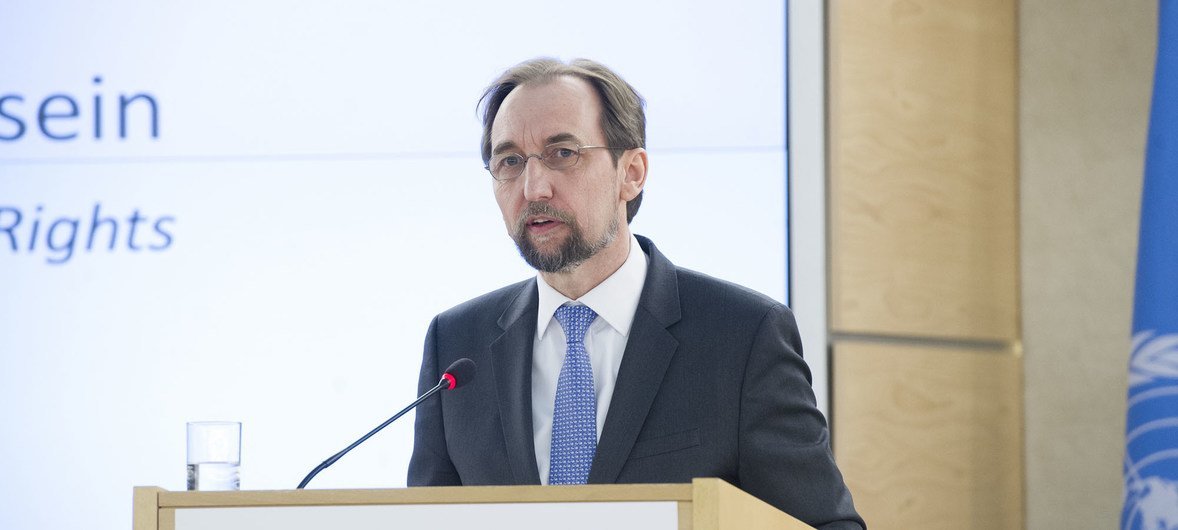
Archive: Zeid Raad Al Hussein, United Nations High Commissioner for Human Rights.
Why is the Universal Declaration of Human Rights attacked by extremists and tyrannical leaders
?human rights
Nearly two months before the end of his mandate, the United Nations High Commissioner for Human Rights warned against the devastating effects of over-nationalism, referring to lessons learned from what happened before and during the Second World War as a result of Nazism and national and ethnic intolerance.
He said in his last comprehensive speech before the Human Rights Council in Geneva:
Historically, nationalism has been the most destructive force the world has ever faced when it has reached the most extreme level of hard-line leaders who serve their own interests and have been strengthened by mass ideologies that have suppressed freedoms themselves. The United States promised it. "
Zaid pointed out that he had spoken before about the refusal of a number of countries to allow visits by human rights experts. That rejection was a serious insult to the work of the human rights system. However, he said that this work would be done through monitoring human rights situations remotely, adding that the fear of the countries involved in the inaccuracies would have to allow the experts to visit them.
Zaid turned to talk about the situation in specific countries and regions, including what has been happening in Syria since the beginning of the conflict. "The horrific abuses committed since then, mainly by the government and its allies, as well as extremists who use violence and their supporters," have inflicted great damage on most areas of Syria and a large number of its people, he said.
Zaid went on to talk about protecting migrants, asserting that human rights are not lost once people cross the border without a visa. He condemned the adoption by many countries of policies that would increase the suffering of the vulnerable. He called on Washington to stop the policy of separating children from their parents, irregular migrants crossing the border into the United States from Mexico.
"I am very concerned about the recently adopted policies that penalize children for the actions of their parents." In the last six weeks, nearly 2,000 children have been forcibly separated from their parents, the American Pediatric Association has described this cruel practice as a violation against children, May cause irreversible damage and long-term consequences. "
"Why does the Universal Declaration of Human Rights and the human rights law system now come under attack not only from violent extremists such as Takfiris, but also from tyrannical, populist and demagogue leaders, some Western academics and even UN officials?"
"I recently heard a UN official say to others: There are no universal human rights, suggesting that these rights are inspired by a Western imagination, I remember saying to myself that the Universal Declaration of Human Rights, the most closely translated document in the world, has been negotiated by the same The political leaders who added universal values to the Charter, and who created the United Nations later, is the United Nations somewhat non-universal? Has its values been derived only from Western values, to become unrepresentative of the rest of the world? "
of course not. The categorical rejection of this comes from studying the same negotiating record among the various states at the San Francisco conference that established the United Nations, Zaid said.
Zaid stressed his belief that human rights are "the most constructive intellectual movements of our time" and among the most successful. In the past 70 years, lasting peace had been achieved among many societies, conflicts of respect for the law had been achieved and a large number of people had been able to express their views in a meaningful way and to have access to education, health care and development opportunities without discrimination.
This year marks the 70th anniversary of the adoption of the Universal Declaration of Human Rights.
Comments
Post a Comment